LMCE is turning ten. The Laboratory Medicine Congress & Exhibition returns to Grand Walkerhill Seoul from October 21 to 23, 2026, together with the 67th Annual Meeting of the Korean Society for Laboratory Medicine, and Sekbio will be in Seoul to talk about recombinant antibodies.
A recombinant antibody is a monoclonal antibody produced from a known DNA sequence in a host cell line such as CHO or HEK293, instead of from a hybridoma or animal ascites. Because the sequence is on file, the antibody can be made again whenever you need it. For IVD teams, that property usually shows up as lower cost and shorter projects, and those are the two topics we want to discuss with you in person.

LMCE & KSLM 2026 at a Glance
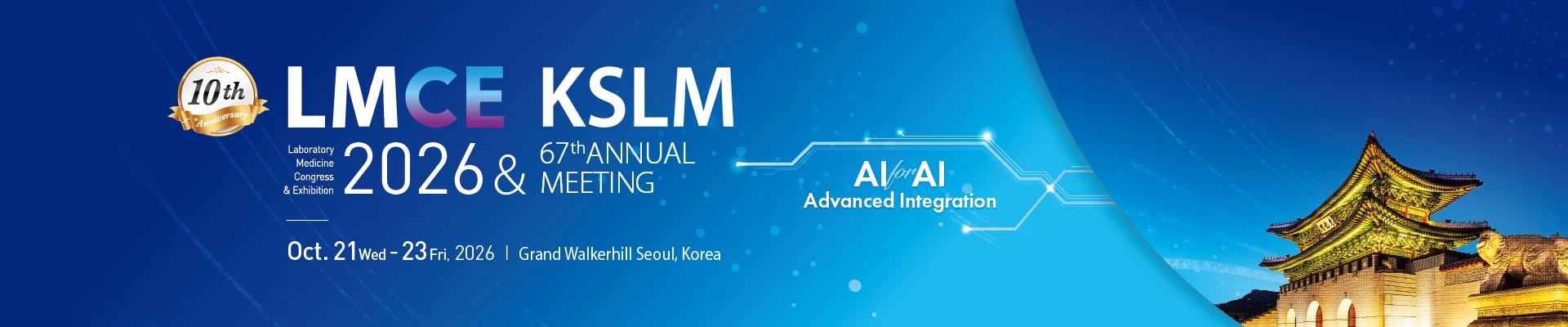
LMCE (Laboratory Medicine Congress & Exhibition) is a congress and trade exhibition for laboratory medicine in Korea. The 2026 edition is its 10th anniversary and runs jointly with the 67th Annual Meeting of the Korean Society for Laboratory Medicine (KSLM). Clinical scientists, laboratory directors and IVD companies meet in one venue, so it is a practical place to discuss reagent raw materials with the people who use them.
- Dates: Wednesday October 21 to Friday October 23, 2026
- Venue: Grand Walkerhill Seoul, Korea
- Events: LMCE 2026 (10th anniversary) and the 67th KSLM Annual Meeting
- Theme: "AI for AI: Advanced Integration"
Session and exhibition hours vary by day, so check the official program before you plan your visit.
What We Are Bringing to Seoul
Sekbio is an ISO 13485-certified IVD antibody manufacturer based in Shenzhen, founded in 2020, supplying more than 200 IVD brands in over 30 countries. In Seoul we will focus on one capability: turning an antibody sequence into a reproducible, manufacturable reagent.
- Sequence-defined monoclonal antibodies expressed in CHO or HEK293 cells, with the construct archived so the same antibody can be produced again
- Matched antibody pairs for ELISA, CLIA and lateral flow assays, listed in our IVD antibody product catalogue
- Stable CHO cell line development for higher-volume products, with yields up to 2.4 g/L (see CHO stable cell line technology)
- Antibody engineering such as humanization, affinity maturation and format conversion when an existing clone needs improvement
We have completed more than 800 CHO expression projects under one quality system. For the regulatory background, our article on recombinant antibody vs hybridoma for IVDR compliance explains why sequence traceability matters in a technical file.
Recombinant Antibodies and Supply Security
Many Korean IVD manufacturers source antibody raw materials from abroad. That makes continuity a standing concern: a discontinued clone or a drifting lot can stop a production line.
Recombinant production helps in two ways. First, the sequence is the specification, so a second supplier can reproduce the antibody from the same sequence if you own it. Second, lot-to-lot variation shrinks because every lot comes from one characterized construct, and binding-activity CV between lots is typically below 10%. Our article on Korea's biomanufacturing import dependency and dual sourcing lays out how to qualify a second source without disturbing a validated assay. For the market backdrop, see our analysis of the IVD raw materials market to 2031 and who supplies the antibodies.
Who Owns the Sequence Matters
Ask any antibody supplier who holds the sequence and the cell line. At Sekbio, all intellectual property from a development project, including sequences, clones and characterization reports, belongs to the client on completion. That is what makes dual sourcing possible later.
How Much Faster Can a Project Move?
Most antibody projects lose time in handoffs, re-qualification and waiting for material, not at the bench. The table shows where recombinant production shortens each stage.
| Project stage | Typical Sekbio timeline | Why recombinant helps |
|---|---|---|
| Sequence and feasibility review | 3-5 business days | A known sequence allows developability checks before any wet work |
| CHO / HEK293 transient expression | As fast as 7 days | Material for pairing tests without building a cell line first |
| Full monoclonal antibody development | 8-12 weeks, sequence to validated antibody | Sequencing, expression and screening handled by one team |
| Stable cell line development | 2-3 months | Locks in supply once the pair has passed your assay |
A team with a sequence in hand can test candidates in about a week instead of waiting for a new hybridoma campaign.
Lot changes are the hidden delay
When an incoming antibody lot behaves differently, the assay has to be re-validated. Our article on antibody batch-to-batch consistency in IVD manufacturing puts that re-validation at roughly 4-8 weeks of work per affected product. One archived construct removes most of the sources of that drift.
Where the Cost Savings Come From
We will not put one percentage on savings, because the answer depends on your assay and supplier. We can show where the money usually goes and which items recombinant production removes:
- Re-validation after lot drift. Fewer unplanned requalification cycles means fewer analyst weeks and fewer delayed releases.
- Lost clones. A hybridoma line that is lost can mean starting over. A sequence on file can be re-expressed.
- Failed scale-up. Testing in transient CHO or HEK293 culture first shows whether a candidate deserves a stable cell line before you pay for one.
- Vendor handoffs. When sequencing, expression, purification and validation sit with different vendors, every transfer costs time and data.
- Animal-derived material. No ascites is needed, which simplifies documentation for regulated products.
Bring the Cost of One Failed Lot
The most useful number is what a failed or re-validated lot costs you today. With that and your annual volume we can say, in the same conversation, whether recombinant production is likely to pay back. Sekbio antibody case studies show completed projects.
For high-volume products the stable cell line route matters most, because unit cost then depends on titer and purification yield rather than on repeated discovery work. Smaller products are often covered by transient expression alone. We choose the route per target. Our comparison of CHO vs HEK293 for IVD antibody production explains how.
What an AI Theme Means for Reagent Raw Materials
The 2026 theme is "AI for AI: Advanced Integration", and laboratory analytics is moving the same way. We are not an AI company, and we will not claim otherwise. Our view is narrower.
Algorithms that read assay results, flag trends or auto-verify reports assume that a given signal means the same thing from one lot to the next. If antibody lots drift, the model sees noise that is really a reagent problem. Consistent, sequence-defined antibodies keep calibration stable and make that kind of data cleaner. In practice, reagent quality is the first input to any analytics layer.
Problems Worth Bringing to the Meeting
A conference conversation works best when it starts from a real problem. Recombinant approaches are most often worth discussing in these situations:
- An antibody supplier whose lots drift, or who has discontinued a clone you depend on
- A CLIA or lateral flow assay that needs higher sensitivity than your current pair delivers
- A research-grade antibody that must become a manufacturable, documented reagent
- A hybridoma-derived antibody you want to convert to a recombinant format for supply security
- An expression bottleneck: low titer, aggregation or chain mispairing in transient culture
- A new marker project where you need candidate antibodies quickly to decide whether to proceed
We took the same message to Japan this month: see the JACLaS EXPO 2026 recap. If your problem is not on the list, bring it anyway. If the honest answer is that recombinant production will not help, we will say so.
What a first conversation usually covers
We start with the assay and work backwards. What is the target, what sample matrix will it run in, and what sensitivity does the product need to claim? From there we look at where the current antibody falls short, whether in low-end signal, cross-reactivity or supply continuity. Then we map the shortest route to a candidate: an existing sequence, a clone you already own, or a new campaign. Most of this can be sketched in twenty minutes, and you leave with a concrete next step and a realistic timeline.
Booking a Meeting in Seoul
If you are attending the congress, a short note beforehand lets us prepare the right data and reserve time for you.
What to Include in Your Meeting Request
Email info@sekbio.com before October 21, 2026 with the target name, assay format, current antibody source and expected annual volume. We will reply with a time and place in Seoul. You can also call +86-135 9034 5917.
If you cannot travel to Seoul, the same team answers requests all year through the Sekbio contact page. Korean-speaking readers can also review our Korean-language protein expression and antibody development page, our monoclonal antibody development service and ISO 13485 quality documentation ahead of the meeting.
Frequently Asked Questions
What is LMCE 2026?
LMCE 2026 is the Laboratory Medicine Congress & Exhibition, which marks its 10th anniversary this year. It is held together with the 67th Annual Meeting of the Korean Society for Laboratory Medicine (KSLM) at Grand Walkerhill Seoul, Korea, from October 21 to 23, 2026. The 2026 theme is "AI for AI: Advanced Integration".
When and where are LMCE and the KSLM Annual Meeting held in 2026?
Wednesday October 21 to Friday October 23, 2026, at Grand Walkerhill Seoul, Korea. Check the official LMCE program for session and exhibition hours, because they can change by day.
What will Sekbio show at LMCE 2026?
Sekbio will present its recombinant antibody technology: sequence-defined monoclonal antibodies produced in CHO and HEK293 cells, with matched antibody pairs for ELISA, CLIA and lateral flow assays. The team can also discuss stable cell line development, antibody engineering and realistic timelines for your own targets.
How does recombinant antibody technology reduce IVD development cost?
A recombinant antibody is defined by its sequence, so it can be re-expressed at any time without maintaining hybridoma lines or repeating animal work. That removes clone-loss risk, cuts the re-validation that follows lot drift, and lets you test expression at small scale before committing to a stable cell line. Sekbio does not quote one savings figure, because the result depends on your assay, current supplier and volume.
How fast can Sekbio deliver a recombinant antibody?
CHO transient expression can return material in as fast as 7 days. A full monoclonal antibody development project, from sequence to a validated antibody, typically takes 8-12 weeks, and building a stable CHO cell line takes about 2-3 months. Engineering steps such as humanization or affinity maturation are scoped after a sequence review.
Why would a Korean IVD manufacturer add a second antibody supplier?
A second qualified source protects production if a single supplier has a lot problem, a shipment delay or a discontinued clone. Qualification takes planning, so it is cheaper to start before a shortage than during one. Sekbio's article on Korea's import dependency and dual sourcing covers how to validate a second antibody or antigen source without disrupting a validated assay.
What should I bring to a meeting with Sekbio in Seoul?
Bring the target or marker name, the assay format (ELISA, CLIA, lateral flow or other), your current antibody source and its main problem, and the volume you expect per year. If you already hold antibody sequences or hybridoma clones, mention that too. Even a rough description lets us tell you quickly whether recombinant production fits.
How can I discuss a project with Sekbio if I can't attend LMCE?
Email info@sekbio.com or use the Sekbio contact page to describe your project. The same team handles requests all year, and you can review the CHO and monoclonal antibody services on the Sekbio platforms page, which also explains how project scopes are prepared.
See You in Seoul
LMCE 2026 and the 67th KSLM Annual Meeting run October 21-23 at Grand Walkerhill Seoul, and Sekbio will be there to discuss how recombinant antibodies can lower the cost of antibody supply, shorten IVD project timelines and give you a second source. We would rather spend our time on your actual target than on a general presentation, so send a few lines about your project before the congress, or find us in Seoul.
To prepare, review the Sekbio antibody pairs you use or are considering, and note the one problem you most want solved. That is where the conversation will start.